 Fort Collins Gas Fireplace Repair
 Pilot Light and Ignition Repair in Fort Collins
Pilot light and ignition repair in Fort Collins runs $200 to $400 installed for a thermocouple or thermopile, $300 to $600 for a full pilot assembly, and $350 to $700 for an electronic ignition module. These are the most common gas fireplace repairs in Larimer County, they are measured with a millivolt meter rather than guessed, and on a standing-pilot unit the part is a common one that many mobile techs carry.
If you smell gas at any point while trying to light the pilot, stop, leave the house, and call Xcel Energy or 911 from outside.
Why pilots fail in October
Fort Collins fireplaces sit cold from April to October and then run hard. The Colorado Climate Center’s station on the CSU campus puts the 1991-2020 January normal at a 45.0 degree high and an 18.3 degree low, and the normal snowfall for October through January alone is 26.1 inches. Six months of dust settles into the pilot hood. Spiders build in the pilot tube and the venturi. The thermocouple tip oxidizes. Then the first cold night, you turn the knob and hold, the pilot lights, you let go, and it dies. Or it holds, but the wall switch does nothing. The week after the first hard freeze is the busiest week of our year for exactly this reason, and a September annual service is how you skip that line.
Two ignition systems, two repairs
Every gas fireplace in the county uses one of these, and knowing which one you have (a pilot that burns all the time, or one that sparks when you turn it on) is the first triage question.
Standing pilot, millivolt system
The pilot burns continuously. In its flame sit two sensors:
- The thermocouple generates a few millivolts, just enough to hold the electromagnet in the gas valve that keeps the pilot gas flowing. When it weakens, or the flame is too weak to heat it, the magnet lets go and the pilot dies the moment you release the knob.
- The thermopile is a stack of thermocouples that generates roughly 300 to 750 millivolts open circuit. That is what the wall switch, thermostat, or remote uses to open the main burner valve. Below about 300 millivolts under load, the valve will not open no matter how many times you flip the switch.
The diagnosis is a meter reading. A good tech measures the thermopile open circuit and under load, checks the pilot flame envelope on both sensors, and tests the switch and wiring by jumping the valve terminals. A thermopile reading 200 millivolts with a good pilot flame gets replaced. A thermopile reading 600 with a dead switch gets a new switch, at $150 to $400 instead of a thermopile you did not need. A pilot that cannot be cleaned back to a sharp blue flame that wraps both sensors gets a new pilot assembly, which on most units includes the hood, the tube, the thermocouple, and the thermopile as one part.
Common valves on these systems are Honeywell, SIT, Dexen, and Robertshaw. Some have a built-in piezo igniter for the pilot; on others you light it with a long lighter through the access hole.
Intermittent pilot ignition (IPI), electronic
No standing pilot. When you turn the unit on, a control module sends high-voltage spark to an electrode at the pilot hood, opens the pilot valve, and waits for a flame sensing rod to prove the pilot exists by rectifying a tiny current through the flame. Once proved, the module opens the main valve. Between fires, the pilot is off. Power comes from a wall transformer, with a battery backup pack for outages.
Failures, roughly in order of how common they are:
- Dead batteries. In the backup pack or the remote. Free to fix, and worth checking before any call.
- Clicks but no flame. Gas valve closed at the wall, a fouled or cracked spark electrode, a blocked pilot orifice, or a module not opening the pilot valve.
- Lights, then drops out after a few seconds. The flame sensing rod is dirty, mispositioned out of the flame, or the ground path is bad. The module thinks the pilot failed and shuts down for safety.
- Lockout. After a few failed tries most modules lock out and need power cycled. That is a symptom, not the fault.
- Module failure. Diagnosed by elimination, after the electrode, rod, and gas supply are verified. Brand sets the part price; this is the $350 to $700 range.
Newer homes in Timnath, Wellington, and Windsor’s post-2010 phases are almost all IPI. The 1990s and 2000s direct-vent units in south Fort Collins and Loveland are mostly millivolt. Linear units such as the Astria Sirius are electronic too, so a pilot that will not light on one usually points at batteries, the ignition board or the flame sensor before the gas valve.
Altitude and the pilot
At 4,997 feet, a pilot flame is smaller and softer than the same pilot at sea level. On a unit that was never derated, the main burner runs rich and the pilot can still be marginal on its own, especially on the propane cabins around Estes Park at 7,743 feet where the derate is well over 20 percent. A pilot flame that only just licks the thermocouple tip will hold in September and quit in January when the cold draft through the vent pulls it sideways. Part of every pilot repair is setting the pilot flame envelope and checking the manifold pressure against the manufacturer’s figure for the elevation.
How the visit goes
- Model number and symptom by message, so the right pilot assembly or module rides out.
- Leak check with a combustible gas detector at the valve, the pilot tube, and the flare fittings. CO check.
- Millivolt readings, flame inspection, switch and remote test. On IPI, spark and flame-sense checks.
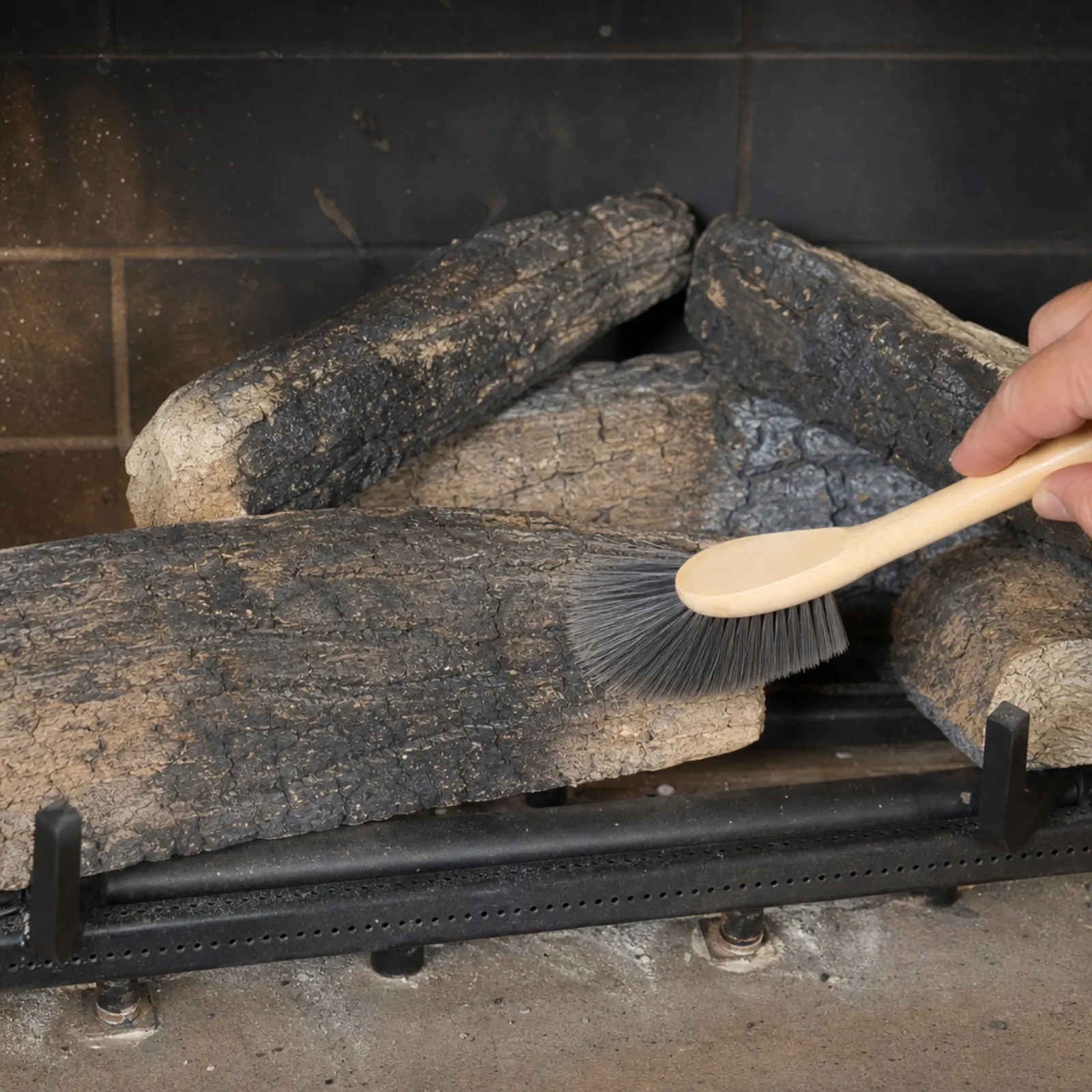
- Clean the pilot assembly and burner ports. Vacuum the logs. Half of “pilot will not hold” calls end here.
- Replace the thermocouple, thermopile, pilot assembly, electrode, sensing rod, or module.
- Set the pilot flame, test-fire, verify shutdown, and write down the readings for you.
What it costs
| Repair | Range |
|---|---|
| Thermocouple or thermopile | $200 to $400 installed |
| Pilot assembly | $300 to $600 installed |
| Spark electrode or flame sensing rod | $150 to $400 |
| IPI module | $350 to $700 installed |
| Wall switch or remote receiver | $150 to $400 |
The pricing page has the rest of the table, including the gas valve that a good tech only condemns after the pilot and thermopile pass. If a bidder quotes a valve without showing you a millivolt reading, ask for the reading.
Pilot repair requests are taken across Fort Collins and out to Loveland, Windsor, Timnath, Wellington, Greeley, and Estes Park. Send the rating plate and say whether the pilot burns all the time or sparks on demand.
Frequently Asked Questions
How much does it cost to fix a pilot light in Fort Collins?
A thermocouple or thermopile replacement runs $200 to $400 installed, a full pilot assembly $300 to $600, and an electronic ignition module $350 to $700. Many techs roll the $150 to $300 diagnostic fee into the repair, so ask. On a standing-pilot unit the part is a common one that mobile techs often carry, so the fix can happen on the first visit.
What is the difference between a thermocouple and a thermopile?
Both sit in the pilot flame and both make electricity from heat. The thermocouple makes a few millivolts, just enough to hold the valve's safety magnet open so the pilot stays lit. The thermopile is a stack of thermocouples that makes 300 to 750 millivolts, enough to open the main burner valve when the wall switch or remote closes the circuit. Pilot will not stay lit points at the thermocouple; pilot lit but no burner points at the thermopile.
Can I relight the pilot myself?
Yes, if the unit has a standing pilot and you follow the lighting label on the valve: knob to Pilot, hold it in, press the igniter until the pilot catches, keep holding 30 to 60 seconds, then release and turn to On. If it drops out when you release, or you smell gas at any point, stop. Do not keep trying; wait five minutes between attempts so unburned gas clears.
My electronic fireplace stopped working during the power outage. Is it broken?
Probably not. Intermittent pilot ignition units run on a wall transformer and fall back to a battery pack when the power is out. If the batteries are dead, nothing sparks. Replace the batteries in the pack (usually four AA behind the bottom louver) and in the remote, then try again. If it still clicks without lighting, it is the electrode, pilot orifice, or module.
Should I leave the pilot on all summer?
Standing pilots use a small amount of gas, and leaving one on keeps the pilot assembly warm and dry, which slows the spider webs and dust that cause October failures. Many Fort Collins owners shut it off to save the gas, and that is fine, but budget a fall service to clean the pilot before the first cold night. Electronic units do not have this choice; the pilot is off between fires by design.
More fireplace services
Areas we serve
- Fort Collins, CO
- Gas Fireplace Repair in Berthoud, Colorado
- Gas Fireplace Repair in Estes Park, Colorado
- Gas Fireplace Repair in Greeley, Colorado
- Gas Fireplace Repair in Johnstown, Colorado
- Gas Fireplace Repair in Laporte, Colorado
- Gas Fireplace Repair in Loveland, Colorado
- Gas Fireplace Repair in Milliken, Colorado
- Gas Fireplace Repair in Severance, Colorado
- Gas Fireplace Repair in Timnath, Colorado
- Gas Fireplace Repair in Wellington, Colorado
- Gas Fireplace Repair in Windsor, Colorado