 Fort Collins Gas Fireplace Repair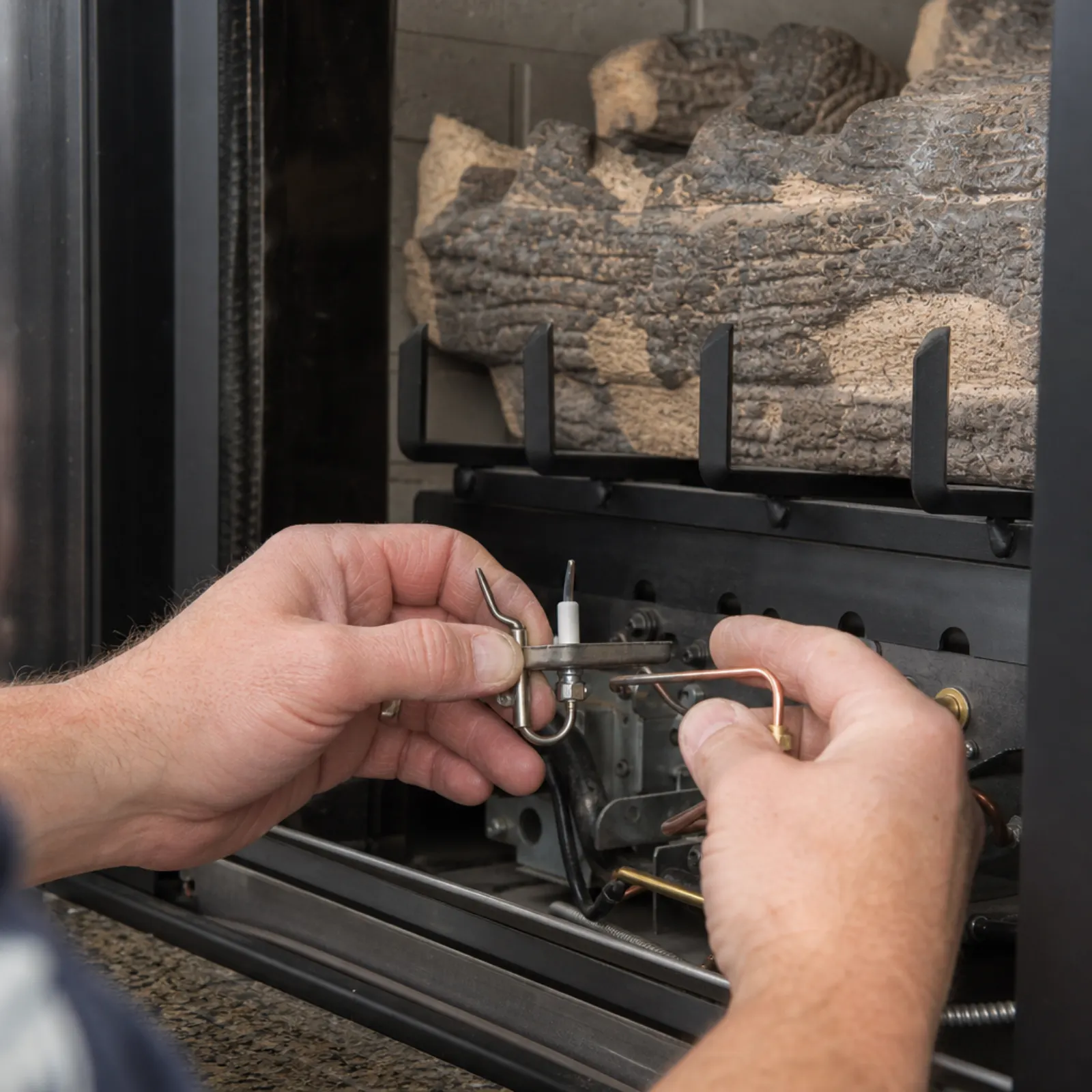
Gas fireplaces, inserts, stoves, and log sets across Fort Collins and Larimer County can be diagnosed and fixed by our techs at Fort Collins Gas Fireplace Repair. A diagnostic service call runs $150 to $300, annual service and cleaning $175 to $350, common part repairs $200 to $600 installed, and a gas valve $500 to $1,000. Describe the symptom, send a photo of the rating plate inside the bottom louver, and you get a real number before anyone drives out.
One rule before anything else: if you smell gas, leave the house and call Xcel Energy or 911 from outside. Do not hunt for the leak, do not flip the wall switch, do not call a fireplace company first. Everything below is for a fireplace that is safe but not working.
What gets fixed
- Gas fireplace repair: weak or lazy flames, sooting glass, a unit that lights and shuts down, a unit that does nothing at all. Diagnosed with a gas detector, a manometer, and a millivolt meter, not a guess.
- Pilot light and ignition repair: thermocouples, thermopiles, pilot assemblies, and the intermittent pilot ignition modules that click without lighting.
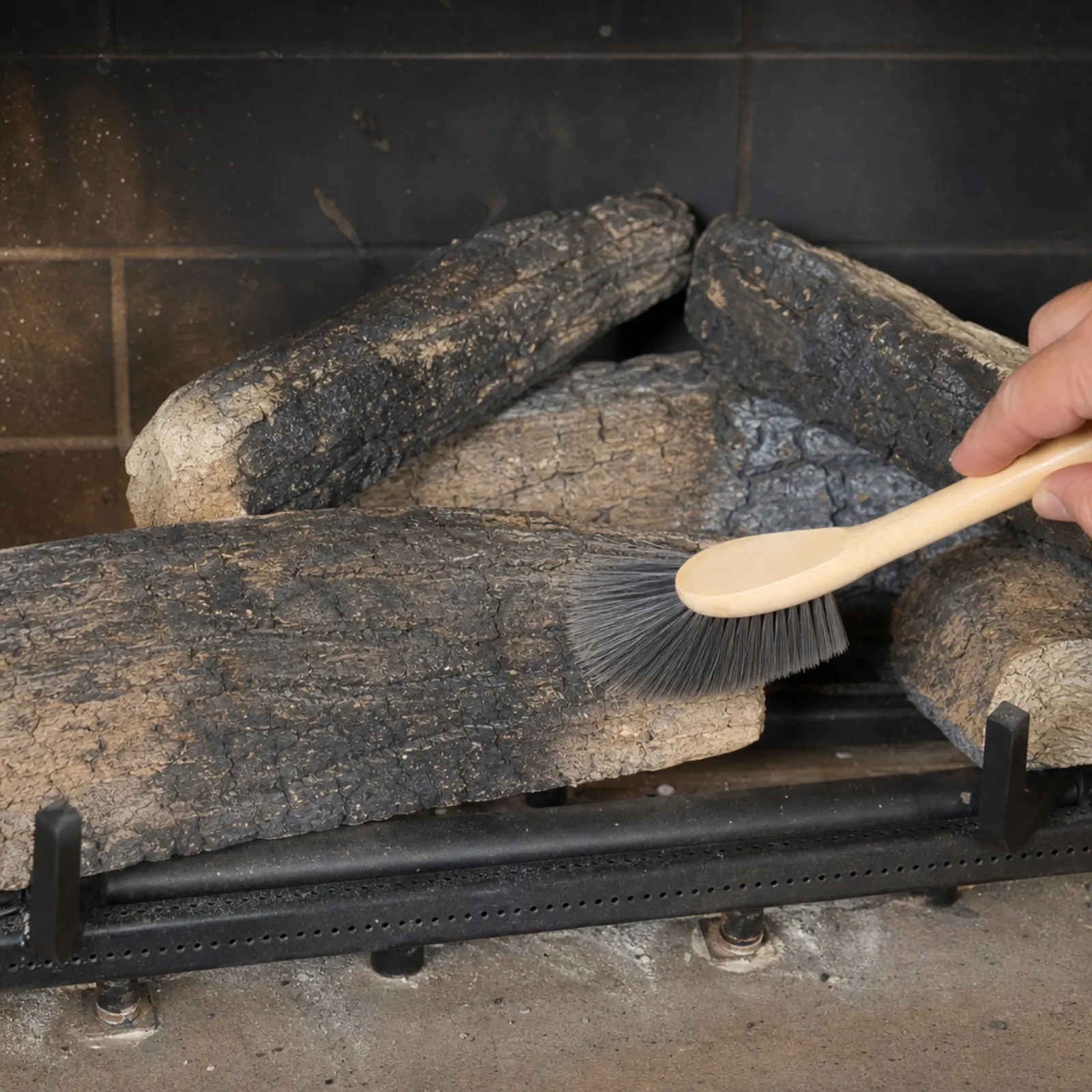
- Annual service and cleaning: burner, pilot, logs, glass, and blower cleaned; gas pressure, millivolt output, venting, and CO checked before winter.
- Insert installation and replacement: new direct-vent inserts sized to the room, set for altitude, vented to code, and permitted.
- Gas logs, remotes, and blowers: vented and vent-free log sets, remote and wall-switch systems, and blower kits.
- Safety inspection and leak check: for a real-estate closing, a new-to-you house, or peace of mind after a strange smell.
If you would rather start from the symptom than the service, the problems pages take ten of them one at a time, and the calculators put a price range on yours before you call.
Why fireplaces fail here, in this order
The pilot sat cold for six months. Fort Collins burns fireplaces for real. The Colorado Climate Center’s station on the CSU campus, which has been recording since 1889, puts the 1991-2020 January normal at a 45.0 degree high and an 18.3 degree low, and NOAA’s normals give the city 51.4 inches of snow a year. From April to October most pilots are off. Dust settles into the pilot hood, spiders build in the venturi, the thermocouple oxidizes, and the first cold night in October the pilot lights but will not hold, or holds but the main burner never comes on. That is the busiest week of the year for hearth techs, and it is usually a $200 to $400 thermocouple or thermopile fix.
Altitude. Fort Collins sits at 4,997 feet. Air is thinner, so the same orifice delivers the same gas into less oxygen, and the flame runs rich. The National Fuel Gas Code (NFPA 54 / ANSI Z223.1) calls for derating gas appliances installed above 2,000 feet by about 4 percent per 1,000 feet, and manufacturers publish high-altitude orifices and conversion kits for elevation bands, with natural-gas kits typically starting above 4,500 feet. A fireplace that was never converted, or a replacement valve or burner installed at sea-level settings, shows it: lazy yellow flames, black soot on the glass and logs, delayed ignition with a whump, and higher carbon monoxide. Up in Estes Park at 7,743 feet, the derate is well over 20 percent and nothing runs right without the right kit. A proper service call checks orifice size and manifold pressure in inches of water column; ask whether yours will.
Age and the housing era. Fort Collins’ housing tells you what is behind the glass. Old Town’s National Register district was listed in 1978 for its 1880s to 1905 Victorian and Romanesque Revival blocks, and the residential streets around it carry masonry fireplaces that were later fitted with gas log sets on a standing pilot. The city’s rapid southward expansion in the late 20th century, out along Harmony Road and down into the Fossil Creek area, was built with factory direct-vent gas fireplaces as standard, many now 20 to 30 years old with the original thermopile, gasket, and blower. The newest stock in Timnath and Wellington runs electronic ignition with a battery backup and a remote, and fails differently: dead batteries, a flame-sense rod, a receiver that lost its pairing.
Sooting and haze. White haze on the inside of the glass is normal combustion deposit and comes off with fireplace glass cleaner, never a household ammonia cleaner. Black soot is not normal. It means logs sitting on the burner ports, a closed air shutter, a wrong orifice, or high pressure. Cleaning the glass without fixing the cause gets you a black window again in a week.
Two ignition systems, two sets of failures
Most competitors do not explain this, so here it is.
Standing pilot (millivolt). A pilot burns all the time. Sitting in that flame are a thermocouple, which makes just enough voltage to hold the gas valve’s safety magnet open, and a thermopile, a stack of thermocouples that generates the 300 to 750 millivolts the wall switch or remote needs to open the main valve. Pilot lights but the main burner will not: usually a weak thermopile, a dirty pilot flame, or a bad switch or wire. Pilot will not stay lit: thermocouple, pilot flame quality, or a valve. Both are measured in millivolts on the spot, so the diagnosis is a reading, not an opinion.
Intermittent pilot ignition (IPI, electronic). A control module sparks the pilot on demand, proves the flame through a sensing rod, then opens the main valve. Clicking with no flame: spark electrode, gas supply, or module. Lights and drops out after a few seconds: flame sensing rod dirty or mispositioned. Nothing at all in a power outage: the backup battery pack is dead, which is a two-dollar fix a lot of people pay a service call to learn.
Gas valves (Honeywell, SIT, Dexen, Robertshaw), remotes (Skytech, Proflame, Acumen), blowers and speed controls, glass gaskets, embers, and logs round out the parts list. The pricing page has every part with its installed range.
How a service call goes
- Triage by message. Model number from the rating plate, the symptom, standing pilot or electronic. This decides which parts we bring and whether it is likely a one-visit fix.
- Safety first. Combustible gas detector at the valve, fittings, and firebox. CO check. Venting and clearance inspection. If something is wrong here, the fireplace stays off until it is fixed, and we tell you why.
- Diagnose with instruments. Pilot flame quality, thermocouple and thermopile output in millivolts, spark and flame-sense on IPI units, wall switch and remote receiver, inlet and manifold gas pressure in inches of water column, orifice size against the altitude.
- Clean. Burner ports, pilot assembly, logs (vacuumed, never washed), glass, blower cage.
- Replace what failed. Pilot assembly, thermopile, valve, module, remote, blower, gasket, glass.
- Test-fire and document. Verify ignition, verify shutdown, set log placement and embers for a proper flame, and leave you the readings so the next tech has a baseline.
Honest pricing, published
| Service | Typical range |
|---|---|
| Diagnostic service call (first hour) | $150 to $300 |
| Annual service and cleaning | $175 to $350 per fireplace |
| Thermocouple or thermopile | $200 to $400 installed |
| Pilot assembly | $300 to $600 installed |
| IPI module | $350 to $700 installed |
| Gas valve | $500 to $1,000 installed |
| Remote receiver or wall switch | $150 to $400 |
| Blower | $250 to $600 |
| Glass and gasket | $200 to $600 |
| Safety inspection and leak check | $125 to $250 |
| Direct-vent insert, installed | $4,000 to $8,000 |
Brand and ignition type set the parts price. A Heat & Glo thermopile and a no-name import thermopile are the same job with different part costs, which is why the photo of the rating plate matters. Full breakdowns and what pushes a job to the top of each range are on the pricing page.
Who does the work, and who licenses them
Colorado splits gas work two ways. The State Plumbing Board under DORA licenses plumbers (residential, journeyman, and master) and its rules, 3 CCR 720-1, say a permit and inspections are required for all fuel gas piping work, through the Board or the local jurisdiction, with a rough inspection under air test and a final. Appliance and mechanical work is licensed locally. The City of Fort Collins issues, among its specialized trade licenses, a Fireplace Appliance license to install listed manufactured fuel-burning fireplace appliances and a separate Gas Piping license, both out of Building Services at 281 North College Avenue, and it requires a $2,000,000 general aggregate insurance certificate. Larimer County licenses Mechanical and Gas Piping contractors for the unincorporated county. Loveland issues National Standard Master Mechanical licenses. Wellington, Estes Park, and Timnath each require their own town contractor license before a permit is issued, and Greeley starts requiring one for permits on January 1, 2027.
Fort Collins Gas Fireplace Repair is an independently operated local service. Ask anyone you hire, us included, to show the license the job’s jurisdiction requires and a current insurance certificate. The National Fireplace Institute’s Gas Specialist certification is a real credential, a 100-question closed-book exam renewed every three years, and it is worth asking any hearth tech, us included, whether they hold it. We do not claim it on anyone’s behalf.
Where we work
Fort Collins and the county, south to Loveland and Centerra, east across the county line to Windsor and out to Greeley, north up I-25 to Wellington, the Harmony Road corridor into Timnath, and up US 34 through the Big Thompson Canyon to Estes Park. Every address in that footprint is covered.
Send the model number, the symptom, and whether the pilot is standing or electronic. You get a diagnosis, a number from the published ranges, and a visit scheduled once we know which parts to bring. Questions first? The FAQ and the about page cover the rest.